
Can Missing Teeth Change the Shape of My Face?
in Phoenix, AZ
Yes. Teeth support the face in two ways: they prop the lips and cheeks from inside, and their roots keep the jawbone stimulated and full. When teeth are missing, the lower face can lose height so nose and chin sit closer together, the lips lose their backing and thin, and the jawbone itself slowly shrinks where the roots used to be, which hollows the cheeks and deepens the folds around the mouth. The change is gradual and often read as ordinary aging, but it has a dental cause and dental answers: implants are the one replacement that keeps the bone stimulated, which is why they hold facial support where ordinary dentures cannot. Dr. Taylor Field at Sonoran Dental Arts in Phoenix can show you on your own X-ray where things stand. Call (602) 861-0505.
People usually ask this after noticing something in the mirror or a photo: the mouth area looks different, the lips sit differently, the face seems a little shorter or older than the rest of them. The suspicion is right. Teeth do more for a face than show when you smile, and their absence rearranges things slowly enough that it is easy to blame age alone.
Dr. Taylor Field walks patients through this anatomy at Sonoran Dental Arts in Phoenix, because understanding the mechanism is what makes the fixes make sense.
See Where Your Bone Stands
One exam and one X-ray show how much support the face has lost and which replacement holds the rest. You leave with a written plan, and nothing starts before your yes.
Get an Appointment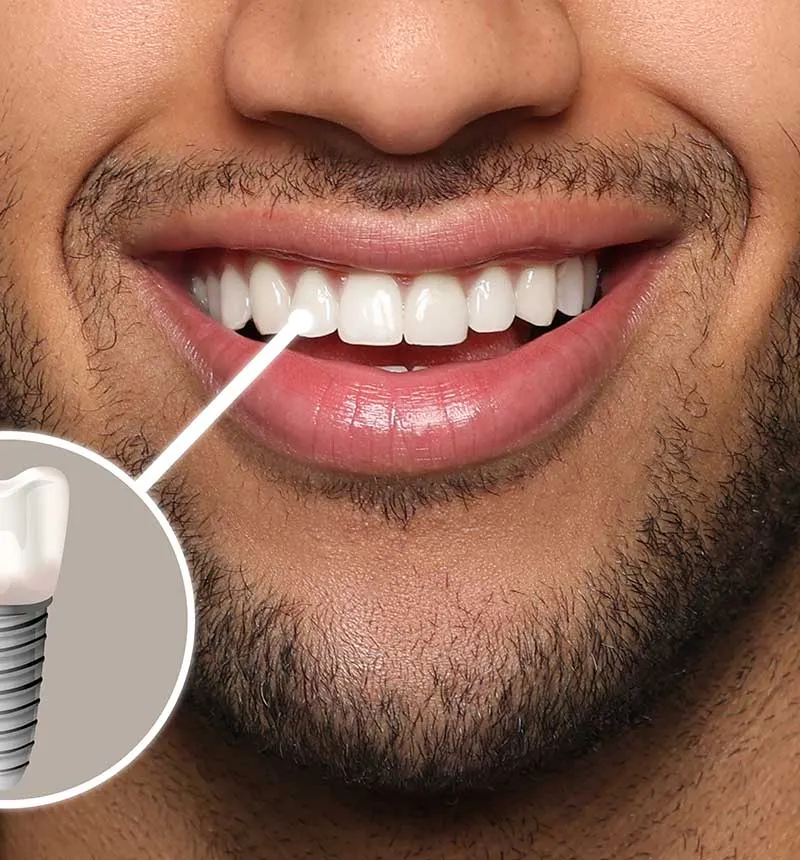
The Two Jobs Teeth Do for a Face
The first job is scaffolding. The upper and lower teeth hold the lips and cheeks out at their natural fullness, and the height of the back teeth sets the height of the lower face, the distance from nose to chin when the mouth is closed. The second job is quieter: every chew sends force down the roots into the jawbone, and that loading is what tells the bone to stay dense and full. A tooth is both a tent pole and a maintenance signal. Lose it and the face loses both at once.
What Changes, and in What Order
With front teeth missing, the lip above or below the gap loses its backing quickly: it sits flatter, looks thinner, and vertical lines around it deepen. With back teeth missing, the change is height. The bite collapses shorter, the chin rotates up and forward, and the folds running from nose to mouth corners fold more deeply because the same skin now covers a shorter frame. Then comes the slow phase: the jawbone under every gap resorbs, shrinking in height and width over years, which hollows the cheeks from inside. The sunken cheeks page covers that mechanism on its own, because it deserves the full explanation.
Why It Reads as Aging
Shorter lower face, thinner lips, deeper folds, hollower cheeks: these are the same features we read as age everywhere, which is why missing teeth age a face beyond their years and why the change so often gets misattributed. People spend on creams for lines that are structural, not dermatological. The skin is draping the frame it is given, and the frame has gotten smaller. That is also the encouraging part, because frames can be rebuilt in a way skin treatments never touch.
Which Replacements Hold the Face, and Which Don't
Any decent replacement restores the scaffolding: a denture, bridge, or implant props the lips and cheeks and gives the lower face its height back, which is why new dentures can visibly freshen a face on day one. The difference shows up underneath. A conventional denture rests on the gum and sends no load into the bone, so the resorption continues under it, which is why dentures need relining as the ridge shrinks away. Implants are the exception: they anchor in the bone and load it the way roots did, which is the signal that keeps it. For a whole arch, a snap-in implant denture or a fixed All-on-4 arch restores the support and defends the bone that carries it. The tooth replacement options page compares all of them.
If Change Has Already Happened
Facial change that has already occurred is not a closed door. Restoring bite height with a well-planned replacement gives back much of the lower-face height and lip support directly, often visibly. Where bone has thinned past what implants need, grafting can rebuild it, covered on the implants with bone loss page. What no one can do is stop time at today for free; the bone keeps thinning under every untreated gap, so the earlier the frame is stabilized, the more of the face it keeps.
How It Works at Sonoran Dental Arts
Dr. Field examines the bite, takes the X-ray, and shows you where support has been lost and what each option would restore, with implants published at $2,000–$2,400 each and the full pricing anatomy on the dental implant cost page. The plan goes home with you in writing, HSA and FSA funds apply, and nothing starts before you have agreed to it.
Helpful Links
Common questions
How long after losing teeth does the face start to change?
Lip and cheek support changes almost immediately with a visible front gap, while bite height and bone loss change over months and years. The bone under a gap thins fastest in the first year and keeps going slowly after that, which is why earlier replacement preserves more.
Do dentures stop the face from changing?
Partly. A denture restores the scaffolding, the lip and cheek support and the bite height, which is why a new set can visibly freshen a face. It does not stop the bone shrinking underneath, because it rests on the gum instead of loading the bone, so the ridge keeps thinning under it.
Why do implants protect the jawbone when dentures don't?
Bone stays full where it is loaded. Tooth roots load the jaw with every chew, and an implant anchored in the bone does the same, so the bone around it keeps its maintenance signal. A denture transfers chewing force to the gum surface and the bone beneath goes quiet and shrinks.
Can replacing teeth reverse changes that already happened?
It restores a real share of them. Rebuilding bite height lifts the lower face and re-supports the lips, which often reads as visibly younger. Bone that has resorbed does not grow back on its own, but grafting can rebuild it where an implant plan needs it.
I'm only missing back teeth nobody sees. Does my face still change?
Yes, and back teeth are the bigger lever. They set the height of the lower face, so losing them lets the bite collapse shorter even though the gaps themselves are invisible. The shortened lower face and deepened folds show up in the mirror long before anyone sees a gap.
What does it cost to restore facial support in Phoenix?
It depends on how many teeth are missing and where. A single implant is published at $2,000–$2,400, and full-arch options are priced in a written plan after the exam and X-ray, before anything starts. HSA and FSA funds apply, and treatment can be phased.
Visit Us in Phoenix
Neighborhoods We Serve Near Phoenix, AZ 85020
Your Local Dentist
Patients visit us from neighborhoods across North Central Phoenix, including Squaw Peak, Biltmore Greens, and Dreamy Draw Homes, thanks to our convenient location near Glendale Ave and 16th Street. We are located near Glendale Avenue and 16th Street in the heart of North Central Phoenix, Sonoran Dental Arts proudly serves a wide range of surrounding communities. Whether you’re in the Biltmore area or tucked near the trails of Piestewa Peak, we’re your trusted neighborhood dental provider. Our patients come from:
- Squaw Peak
- Squaw Peak Foothills
- Biltmore Highlands
- Dreamy Draw Homes
- Canterra at Squaw Peak Condominiums
- Lincoln Vista
- Desierto Sierra
- The Pointe
- Biltmore Vista
- Biltmore Greens
- Biltmore Courts
- Biltmore Colony
- Biltmore Villas
- Arizona Biltmore Estates
- Granada Park
- Lincoln Vistas
- Madison Village
- Estate Monterra
- Rolling Hills Estates
- Tonka Vista
- Hopi Vista
- Patio Del Sol
- Torre Blanca
- Royal Crest Villa
- Ocotillo Manor
- Gatewood Manor
- East Orangewood
- Orangewood Heights
- New NorthTown
- Navea Ventura
- La Mirada Condominiums
- Madison Meadows
- Luci’s at the Orchard Area
- Arizona Sunburst Inn vicinity
- Madison Rose Lane Area
- Bethany Estates
- Piestewa Peak Neighborhood
- The Pointe at Squaw Peak Resort Area
- Holy Trinity Greek Orthodox Area
- Sprouts Farmers Market Neighborhood (Glendale & 16th)
If you’re located in or near any of these neighborhoods, Dr. Taylor Field and the Sonoran Dental Arts team are here to provide top-quality, patient-centered dental care close to home. Explore our General Dentistry, Family Dentistry, Kids Dentistry, Cosmetic Dentistry, Dental Implant Services, Invisalign, and Emergency Dental Care to see how we can serve you.
Life in North Central Phoenix is full. Work commutes. Weekend hikes. Quick dinners with friends. When you’re balancing all that, your smile should be the last thing holding you back. That’s where dental implants come in. They restore confidence. They keep life moving—whether you’re near Squaw Peak, Dreamy Draw, or grabbing coffee by Luci’s at the Orchard.
In the Squaw Peak Foothills and Dreamy Draw Homes, mornings often start outdoors. The trails are busy, the sun comes up fast, and neighbors are out early. Missing teeth or a loose denture can make those moments feel smaller than they should. Dental implants bring stability back. You laugh without worry. You share a trail snack or coffee and feel like yourself again.
The Biltmore neighborhoods have their own rhythm. Biltmore Highlands, Arizona Biltmore Estates, Biltmore Greens, Biltmore Vista—here life is busy and polished. Business lunches at the Biltmore, family nights out, evenings with friends. Implants fit naturally into this lifestyle because they look and function like real teeth. You don’t think about them. You just live.
Closer to Granada Park or Madison Meadows, afternoons mean school pickups, sports practices, and grocery stops. Families move quickly. Nobody wants dental care that slows everything down. With implants, you can eat the meals you want, smile without hesitation, and get back to what matters. No adhesives. No slipping. Just strong, reliable teeth.
Evenings near Lincoln Vista, Tonka Vista, and Rolling Hills Estates are for winding down. Neighbors chat. Kids ride bikes. Dinner happens at home or a favorite local spot. For many, enjoying those meals fully wasn’t always possible. Implants change that. Steak, crunchy veggies, fresh bread—they’re all back on the table. Life tastes better again.
Weekends at The Pointe Resort or gatherings near Canterra at Squaw Peak Condominiums bring people together. It’s laughter in photos. It’s toasts at celebrations. It’s casual moments that deserve a confident smile. Implants give you that. They don’t come out. They don’t shift. They’re built to last.
This community is close-knit. From East Orangewood to Navea Ventura, from Torre Blanca to Patio Del Sol, people share recommendations. A dental office earns trust when care feels personal. Dental implants are more than a procedure—they’re a step toward comfort, security, and enjoying life in the neighborhoods you love.
Living near Piestewa Peak or the Glendale and 16th Street corridor means convenience matters. You want treatment that’s close to home, not across town. Implants make long-term dental health simple. They protect your jaw, preserve your smile, and free you from constant repairs.
If you’re in Squaw Peak, Dreamy Draw, the Biltmore communities, or any of the neighborhoods nearby, know that implants are an option designed for real life here. Strong. Natural. Lasting. A solution that fits where you live, eat, play, and connect. That’s how dental implants help you keep pace with Phoenix—and enjoy every part of it.